Study Guide
1. Basic Facts
“The Boys Next Door” is a play that takes the audience upon a rollercoaster of emotions, from silly and fun to heartbreak but joyful. The intensive weaving of the characters emotions done by the play write Tom Griffin is simply genius when productions can correctly identify the strengths and weaknesses of each character. The show depicts four mentally challenged men who show the audience daily struggles with added kinks, and shows the tender side of Jack, their care taker. Tom Griffin didn't do anything spectacular when he wrote his dramatic comedy "The Boys Next Door," but he did give us a light-hearted play that takes a risk in its premise: It is about mentally retarded adults. That the play dares to let them be funny is admirable; the temptation among over-reactionary types would be to assert that a comedy involving the mentally handicapped is automatically mocking those people. This study guide will be used to help the audience of incoming freshmen at a University.
The setting is a group home supervised by Jack, a gaunt, graying man who loves the men he cares for but is feeling burnt out by his responsibility to them. First there is Arnold ,whom Jack tells us is "marginal" as far as being retarded, but who is most definitely a nervous, obsessive sort of fellow. Norman high-functioning, works at a doughnut shop and has a sweet crush on Sheila, who is also mentally challenged. Lucien is somewhat less able to function in society, a fact that comes into play when the government mistakenly concludes otherwise and discontinues his Social Security payments.
Griffin clearly did not intend for the humor to be at the expense of the retarded characters, but it does stem naturally from the fact that they are retarded. That is to say, much of what's funny -- their reaction to a mouse in their apartment, Norman's obsession with keys, and so on -- would play out much differently if they were not mentally challenged. These characters happen to be, and the play honestly examines their particular foibles in a manner that is funny and at times even hilarious. The play is little more than a series of vignettes, with only minor plot threads connecting them, and as such there is a feeling of fragmentation about it. But the acting is extremely well done, with each of the actors carefully -- and usually successfully -- balancing the line between portraying real people and becoming stereotypes.
It reaches its emotional peak in the scene between Barry and his father, a difficult conversation that plays out with the right mix of awkwardness and sensitivity. The comic zenith, meanwhile, is Norman's completely unhinged behavior while on a date with Sheila -- a date that consists of sitting in the apartment and discussing keys.
All in all “The Boys Next Door” are exactly that, they are charming, sweet, and sometimes misunderstood in the most comedic ways. To really enjoy this show you must know the struggles and temptations that these men go through on a day in and day out basis but even then, what’s not to love about four grown men who just enjoy being kids?
To give you more an inside on the Playwright himself I’ll explain some interesting facts about the man who created this heart filled play. Tom Griffin is an American playwright who began his writing in Vermont in the early 1960s as a struggling actor and director. He originally planned to name the show “The Boys Next Door” as “Damaged Hearts and Broken Flowers” but decided the show then sounded too deep. He wrote the show to me a comical but influencial reflection on societies view of the critical life of disabled men and their care taker. He won several awards and went on to also write other plays including Amateurs, Einstein and The Polar Bear, Pasta, and Mrs. Sedgewick's head.
Reviews :
1. Producing Organization : Jay H. Fuchs2. Theater/Venu : Lambs Theater3. City/State : New York, NY4. Director : Josephine R Abady5. Designers : Set , David Potts . Sound , Lia Vollack. Costume, C.L. Hundley .6. Run Dates : November 23 1987- April 17th 1988
“None of it seemed very funny so this viewer bowed out at the intermission after watching Sheila (Deborah Gilmour Smyth), a deaf and retarded girl, call herself a geranium and dance with Norman (Robert Smyth), a chubby, slow man who called himself a doughnut. A little choreographed routine and a spotlight transformed their clunky, real-life efforts at dancing into their fantasy of "normal" or "perfect" movement. All around, people cried and commented how sweet that was, implying that the characters are "just like us," which of course they are in some ways. It's their differences from "us" that make the developmentally disabled the subject of this show, however. Griffin never lets them speak for themselves; what a show that might have been, created from real life, not the dictates of dramatic form. And though other San Diego directors have used handicapped actors, director Kerry Meads settled for traditional casting of mainstream actors pretending to be disabled”
Anne Marie Welch San Dieago Union April 6th 1988 (newsbank)
“The best time I've had in the theater recently came a couple of weeks ago in a third-floor, walk-up space on West 44th Street, New York. It's a show called ""The Boys Next Door ,'' a modest and disarming story that draws its audience into a household of mentally disabled men, first by laughing at them, then laughing with them and finally by tangling us up in their lives, and in that of the social worker who cares for them. What threatens to be an alarming indulgence in us-and-them humor grows before the audience's eyes into a conspiracy of understanding. It's an extraordinarily effective work, so please excuse the cliche when I report that I laughed a lot and cried almost as much."
Peter Haugen Sacramento Bee April 20th 1988 (newsbank)
2. Things to think about.
A. How do you convey the realistic feel of the main characters without exaggerating but still having the comedic relief?
B. What sort of important events took place in this time period in which directly involved the status of the mentally challenged, I.E. why are they living where they are living now as adults?
C. What prompts the emotions during the dance scene where you the audience first sees the love between two of the mentally challenged characters? What’s the initial spark?
D. How do you decide what to do with the set? How to keep the audience engaged with such a simple set while keeping the ideas and mindset of the playwright still in mind?
E. In the end, with the lights, sound and set, how can you convey the most powerful moment in the show, the most powerful idea in the show, and the most powerful scenes in the show and what are they and how do they take place?
3. Helpful Links
A. Library of Congress http://catalog.loc.gov/ . Library of Congress provides any type of book of any kind you could be interested in finding, different versions, different writers . This is a very good tool when trying to find a specific copy.
B. Wikipedia http://wikipedia.com Although this should only be used for helpful facts this site proved to be quite useful in generating specific facts to lead me to find other interesting show details along with facts from the time period.
C. News Bank http(://infoweb.newsbank.com/iwsearch/we/Homepage?p_action=doc&p_theme=current&p_nbid=K61H4CNFMTMwOTE5MjAzMi42NzQ5Mzc6MToxNDoxNTguMTM1LjUyLjE3Mw )
A must use for researching Production Histories and all the facts needed for them, this website proved to be very useful when trying to find the specifics about productions.
D. Internet Broadway Database http://www.ibdb.com/index.php This website proved to be very helpful in finding different productions done on Broadway. I used this to find different ways the show has been produced and who different actors and directors were of the shows.
E. Lortel (http://www.lortel.org/lla_archive/index.cfm) Lortel provided me with a great amount of information for all of the shows done off Broadway. This provided me with the information needed to look deeper into how the shows were produced and designed, a very useful tool for dramaturgy.
Tuesday, June 28, 2011
Program Notes
"The Boys Next Door" Program Notes
Have you ever wondered what the daily struggles and tribulations of the mentally handicapped really are? Have you often watched from a far as you can see the simple things in life bringing joy to these people? We all have, and with the help of Tom Griffin we will have the chance to glimpse inside the mind of four men living together under special circumstances and how the cope with struggles that anyone would find difficult. As the show progresses so do the characters and we as a cast invite you on the magnificence that “The Boys Next Door” bring to the show and the world as a whole.
This show displays four men with different disabilities living together as a part of an agreement and the setting is a group home supervised by Jack a gaunt, graying man who loves the men he cares for but is feeling burnt out by his responsibility to them. First there is Arnold ,whom Jack tells us is "marginal" as far as being retarded, but who is most definitely a nervous, obsessive sort of fellow. Norman high-functioning, works at a doughnut shop and has a sweet crush on Sheila, who is also mentally challenged. Lucien is somewhat less able to function in society, a fact that comes into play when the government mistakenly concludes otherwise and discontinues his Social Security payments.
The show is set in 1985 in Boston Massachusetts during a time when Mentaly Handicaped people were being put in homes because taxes could no longer pay for Mental Hospitals. Only the severally ill were placed in hospitals and those found not suitable for living in society. Both men and women of all disabilities are asked to move into homes with caretakers ( paid for by the state ) and live in apartments complexes to hopefully live normal lives. All in all “The Boys Next Door” are exactly that, they are charming, sweet, and sometimes misunderstood in the most comedic ways. To really enjoy this show you must know the struggles and temptations that these men go through on a day in and day out basis but even then, what’s not to love about four grown men who just enjoy being kids?
To give you more an inside on the Playwright himself I’ll explain some interesting facts about the man who created this heart filled play. Tom Griffin is an American playwright who began his writing in Vermont in the early 1960s as a struggling actor and director. He originally planned to name the show “The Boys Next Door” as “Damaged Hearts and Broken Flowers” but decided the show then sounded too deep. He wrote the show to me a comical but influential reflection on societies view of the critical life of disabled men and their care taker. He won several awards and went on to also write other plays including Amateurs, Einstein and The Polar Bear, Pasta, and Mrs. Sedgewick's head.
With the combination of Mr. Griffins joyful and understanding sides he really brings quite a magnificence to the stage that any audience of any kind will enjoy. We invite you to sit back, and enjoy the world of these four amazing men and live the life that they live on a constant basis however, be ready to laugh and cry along with these characters because they surely do make you want to do both, and enjoy it.
Have you ever wondered what the daily struggles and tribulations of the mentally handicapped really are? Have you often watched from a far as you can see the simple things in life bringing joy to these people? We all have, and with the help of Tom Griffin we will have the chance to glimpse inside the mind of four men living together under special circumstances and how the cope with struggles that anyone would find difficult. As the show progresses so do the characters and we as a cast invite you on the magnificence that “The Boys Next Door” bring to the show and the world as a whole.
This show displays four men with different disabilities living together as a part of an agreement and the setting is a group home supervised by Jack a gaunt, graying man who loves the men he cares for but is feeling burnt out by his responsibility to them. First there is Arnold ,whom Jack tells us is "marginal" as far as being retarded, but who is most definitely a nervous, obsessive sort of fellow. Norman high-functioning, works at a doughnut shop and has a sweet crush on Sheila, who is also mentally challenged. Lucien is somewhat less able to function in society, a fact that comes into play when the government mistakenly concludes otherwise and discontinues his Social Security payments.
The show is set in 1985 in Boston Massachusetts during a time when Mentaly Handicaped people were being put in homes because taxes could no longer pay for Mental Hospitals. Only the severally ill were placed in hospitals and those found not suitable for living in society. Both men and women of all disabilities are asked to move into homes with caretakers ( paid for by the state ) and live in apartments complexes to hopefully live normal lives. All in all “The Boys Next Door” are exactly that, they are charming, sweet, and sometimes misunderstood in the most comedic ways. To really enjoy this show you must know the struggles and temptations that these men go through on a day in and day out basis but even then, what’s not to love about four grown men who just enjoy being kids?
To give you more an inside on the Playwright himself I’ll explain some interesting facts about the man who created this heart filled play. Tom Griffin is an American playwright who began his writing in Vermont in the early 1960s as a struggling actor and director. He originally planned to name the show “The Boys Next Door” as “Damaged Hearts and Broken Flowers” but decided the show then sounded too deep. He wrote the show to me a comical but influential reflection on societies view of the critical life of disabled men and their care taker. He won several awards and went on to also write other plays including Amateurs, Einstein and The Polar Bear, Pasta, and Mrs. Sedgewick's head.
With the combination of Mr. Griffins joyful and understanding sides he really brings quite a magnificence to the stage that any audience of any kind will enjoy. We invite you to sit back, and enjoy the world of these four amazing men and live the life that they live on a constant basis however, be ready to laugh and cry along with these characters because they surely do make you want to do both, and enjoy it.
Friday, June 24, 2011
Production History Statement
Statement
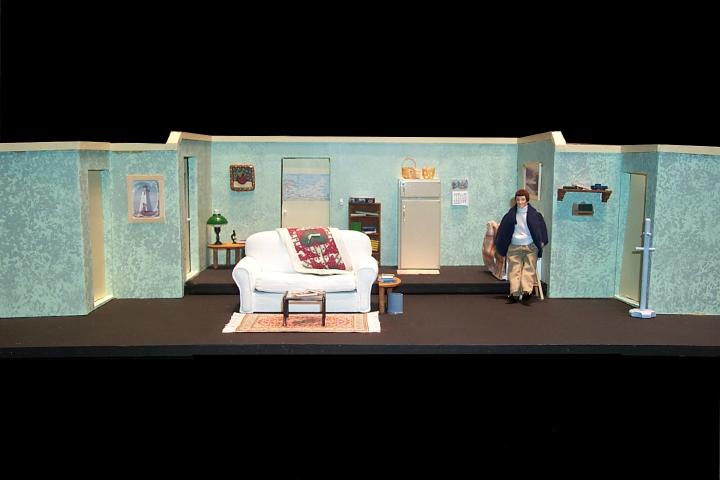
While reading the play “The Boys Next Door” there were several issues that did arise from the text that would need to be addressed right from the beginning with the director. One of the issues would be to do non traditional casting or not, would it be possible to cast a full cast of mentally handicapped men bringing an even more resounding effect to the show, or would you want to just stick to the basics and have four actors ACT disabled. From the shows that I have researched there is a mixed emotion among producers and directors, some really like to have the realistic effect of having the real casting of the men while others prefer to stick with regular actors so its very interesting to see the differences in casting. Another issue would be how to design the set, the text is very specific on where each room is and where certain areas of the house are, would you go with a box set? A rotating set, would you divulge into a different outlook and go away from what the text wants?
There are also some very common issues with producing this play here at Sam Houston State, such as the casting as I mentioned before. This is the only key factor that I can find being an issue here on this campus because we have such a large variety of ethnicity and differences in many of our students , this show would be a perfect show to do but as I mentioned before, how would you go about casting the four men? I believe that if this show was done at Sam Houston I would recommend casting normal college kids as these adults and really get them to understand how these men would have lived and acted without trying to be “comical” about it because as young adults we tend to believe that just because mentally handicapped person is in a show that means we need to exaggerate their lifestyle and that simply cannot happen in this particular show.
From what I have researched I have seen some very interesting ways to put this show on. Many directors take the approach as I would have done here at Sam Houston State, however there are a handful of these shows done where the 4 men are truly handicapped and are phenomenal actors and it seems to really hit home for people while on the other hand if done correctly the show has the same effect with normal actors. Also it seems that most directors or producers go with the box set approach. Seeing the set as a whole really helps the audience go through this plot, it all happens in the apartment (excluding the dance hall scene which can be arranged in the set on a quick scene change) so every set I have seen for this show seems to go with a box set style which is how I would approach it also, even before researching the different shows.
This show is a huge hit off and on Broadway, when these actors really learn these characters and can soak up the pure joy that these characters have inside them the show cannot be disliked. During my research I did not find one critic who did not enjoy the performance they saw, everyone seemed to have the same view which was this show is a rollercoaster of emotions and the outlook on these men is truly something that everyone should witness. As I mentioned before ,however, this show must not be overdone and exaggerated because if it is, it will be viewed as harsh and insensitive so one must be careful when taking this show on.
While reading the play “The Boys Next Door” there were several issues that did arise from the text that would need to be addressed right from the beginning with the director. One of the issues would be to do non traditional casting or not, would it be possible to cast a full cast of mentally handicapped men bringing an even more resounding effect to the show, or would you want to just stick to the basics and have four actors ACT disabled. From the shows that I have researched there is a mixed emotion among producers and directors, some really like to have the realistic effect of having the real casting of the men while others prefer to stick with regular actors so its very interesting to see the differences in casting. Another issue would be how to design the set, the text is very specific on where each room is and where certain areas of the house are, would you go with a box set? A rotating set, would you divulge into a different outlook and go away from what the text wants?
There are also some very common issues with producing this play here at Sam Houston State, such as the casting as I mentioned before. This is the only key factor that I can find being an issue here on this campus because we have such a large variety of ethnicity and differences in many of our students , this show would be a perfect show to do but as I mentioned before, how would you go about casting the four men? I believe that if this show was done at Sam Houston I would recommend casting normal college kids as these adults and really get them to understand how these men would have lived and acted without trying to be “comical” about it because as young adults we tend to believe that just because mentally handicapped person is in a show that means we need to exaggerate their lifestyle and that simply cannot happen in this particular show.
From what I have researched I have seen some very interesting ways to put this show on. Many directors take the approach as I would have done here at Sam Houston State, however there are a handful of these shows done where the 4 men are truly handicapped and are phenomenal actors and it seems to really hit home for people while on the other hand if done correctly the show has the same effect with normal actors. Also it seems that most directors or producers go with the box set approach. Seeing the set as a whole really helps the audience go through this plot, it all happens in the apartment (excluding the dance hall scene which can be arranged in the set on a quick scene change) so every set I have seen for this show seems to go with a box set style which is how I would approach it also, even before researching the different shows.
This show is a huge hit off and on Broadway, when these actors really learn these characters and can soak up the pure joy that these characters have inside them the show cannot be disliked. During my research I did not find one critic who did not enjoy the performance they saw, everyone seemed to have the same view which was this show is a rollercoaster of emotions and the outlook on these men is truly something that everyone should witness. As I mentioned before ,however, this show must not be overdone and exaggerated because if it is, it will be viewed as harsh and insensitive so one must be careful when taking this show on.
Production History 6

Production History 6
1. Producing Organization : Worcester Forum Theatre Ensemble
2. Theater / Venu : Performing Arts Center of Worcester
3. City, State : Worcester
4. Director : Brian T Tivnans
5. Run time : April 20th – May 20th 1990
1. Producing Organization : Worcester Forum Theatre Ensemble
2. Theater / Venu : Performing Arts Center of Worcester
3. City, State : Worcester
4. Director : Brian T Tivnans
5. Run time : April 20th – May 20th 1990
“As far as the Worcester Forum Theatre Ensemble offering of Tom Griffin 's "The Boys Next Door " is concerned, the answer is an emphatic yes. The production, which opened its run last night before a sell-out audience of 117, is exceptionally well rendered. The considerable humor in the script actually grows on you as the play progresses because the characters have been drawn so skillfully by the cast. The play also has several genuinely poignant moments, and these too register true under director Brian T. Tivnan's sympathetic direction.”
- Richard Duckett Worcester Telegram and Gazette April 27th 1990
Production History 5

Production History 5
1. Producing Organization : A Peoples Theater
2. Theater/Venu : Studio Theater at Theater Garage
3. City, State : Orlando, FL
4. Director : Chris Jorie
5. Designers : Set Design – John Roux , Lighting – Jay BeckerRun time : August 15- September 9th 2001
1. Producing Organization : A Peoples Theater
2. Theater/Venu : Studio Theater at Theater Garage
3. City, State : Orlando, FL
4. Director : Chris Jorie
5. Designers : Set Design – John Roux , Lighting – Jay BeckerRun time : August 15- September 9th 2001
“The first time I saw Tom Griffin 's little comedy-drama The Boys Next Door , I thought it was all too cuddly. The second time it was sentimental and broad. But in its latest incarnation, director Chris Jorie brings such sensitivity to this slip of a story that, with his People's Theatre production, all my preconceptions are gone. Jorie and his actors have found bravery in what once seemed like mush. They've found the heart of Griffin 's play. Jorie is a new face for People's Theatre, a 2-year-old multicultural company that has bumped along from show to show without discovering a strong directorial hand. With The Boys Next Door , the shift is obvious. Not only has Jorie attracted actors who might not have auditioned for the company otherwise, but he has led them to be as good as they can. It's what theater should always be.”
- Elizabeth Maupin The Orlando Sentinel
- Elizabeth Maupin The Orlando Sentinel
“Yet it's the more serious moments that linger the way these men struggle, the way both the weaker- and stronger-minded try to do their best and their best is not enough. You can see it in the chilling scene between Barry and his blustery father (Ken Sklar), when neither of them has a clue how to behave. And you can feel it in the break in Bruner's voice and the red around his eyes when the beaten-down Jack (Bruner has never been better) prepares to leave his charges behind. People's production stumbles against some technical challenges in the bare-bones Studio Theatre: Exits aren't always where they need to be, the rudimentary set (uncredited in the program) doesn't pass for all the locations it must, and the erratic lighting doesn't allow actors to make their exits gracefully between scenes. Still, the acting throughout is low-key and terrific, just as it must be to make this little play work. It has the moments, and it may flirt with sentimentality. But a good director takes it all in stride.”
- Phillip R. Greeves Orlando Sentinel
- Phillip R. Greeves Orlando Sentinel
Production History 4

Production History 4
1. Producing Organization : Atlanta Theater Company
2. Theater/Venu : Theater in Square
3. City,State :Atlanta, GA
4. Director : Norman McPhee
5. Run Times : September 12- October 1st 1989
“There are few more soul-satisfying sights than a small theater leaping beyond its old artistic limits - and making it. Triumphantly. Ladies and gentlemen, please be reintroduced to Theatre in the Square, for its production of "The Boys Next Door " - rich with laughter and heartbreak and startling candor - may be like nothing you've ever seen there. It not only gets the Atlanta theater season off to a streaking start, it also sets high marks in acting - in particular, an absolutely brilliant performance by David De Vries - that will be hard to match the rest of the season.”
- Dan Hulbert Atlanta Journal
Production History 3

Production History 3
1. Producing Organization – John Herochik
2. Theater/Venu – McCarther Theater
3. City/State – Princeton , NJ
4. Director – Nagle Jackson
5. Degisners – Set, John Jensen . Costume Marie Miller. Lighting – F. Mitchell Dana
6. June 18 1986
Review Link : http://search.proquest.com/hnpnewyorktimes/docview/111104985/130187F47716D0F16C2/3?accountid=7065
D.J.R. Brunkner NY Times
“It is hardly surprising that “The Boys Next Door”, Tom Griffin’s first play having its premier at the McCarter Theater , is emotionally appealing. It is the story of four retarded men living in a city apartment and working at simple jobs. Mr. Griffin avoids most controversial aspects of the subject and concentrates on the men’s hopes”.
http://search.proquest.com/hnpnewyorktimes/docview/111071345/13018859FBE501F6152/4?accountid=7065
Alvin Klein NY Times
“But wonder one must, for the new play by Tom Griffin at the “renewed” McCarter Theater is all about the mentally handicapped. Is it a laughing matter?
It takes an audience time to figure out just what the playwright is up to. By the end of the first act , at least , there is a clue.”
1. Producing Organization – John Herochik
2. Theater/Venu – McCarther Theater
3. City/State – Princeton , NJ
4. Director – Nagle Jackson
5. Degisners – Set, John Jensen . Costume Marie Miller. Lighting – F. Mitchell Dana
6. June 18 1986
Review Link : http://search.proquest.com/hnpnewyorktimes/docview/111104985/130187F47716D0F16C2/3?accountid=7065
D.J.R. Brunkner NY Times
“It is hardly surprising that “The Boys Next Door”, Tom Griffin’s first play having its premier at the McCarter Theater , is emotionally appealing. It is the story of four retarded men living in a city apartment and working at simple jobs. Mr. Griffin avoids most controversial aspects of the subject and concentrates on the men’s hopes”.
http://search.proquest.com/hnpnewyorktimes/docview/111071345/13018859FBE501F6152/4?accountid=7065
Alvin Klein NY Times
“But wonder one must, for the new play by Tom Griffin at the “renewed” McCarter Theater is all about the mentally handicapped. Is it a laughing matter?
It takes an audience time to figure out just what the playwright is up to. By the end of the first act , at least , there is a clue.”
Production History 2

Production History 2
1. Producing Organization : Jay H. Fuchs
2. Theater/Venu : Lambs Theater
3. City/State : New York, NY
4. Director : Josephine R Abady
5. Designers : Set , David Potts . Sound , Lia Vollack. Costume, C.L. Hundley .
6. Run Dates : November 23 1987- April 17th 1988
1. Producing Organization : Jay H. Fuchs
2. Theater/Venu : Lambs Theater
3. City/State : New York, NY
4. Director : Josephine R Abady
5. Designers : Set , David Potts . Sound , Lia Vollack. Costume, C.L. Hundley .
6. Run Dates : November 23 1987- April 17th 1988
"None of it seemed very funny so this viewer bowed out at the intermission after watching Sheila (Deborah Gilmour Smyth), a deaf and retarded girl, call herself a geranium and dance with Norman (Robert Smyth), a chubby, slow man who called himself a doughnut. A little choreographed routine and a spotlight transformed their clunky, real-life efforts at dancing into their fantasy of "normal" or "perfect" movement. All around, people cried and commented how sweet that was, implying that the characters are "just like us," which of course they are in some ways. It's their differences from "us" that make the developmentally disabled the subject of this show, however. Griffin never lets them speak for themselves; what a show that might have been, created from real life, not the dictates of dramatic form. And though other San Diego directors have used handicapped actors, director Kerry Meads settled for traditional casting of mainstream actors pretending to be disabled."
- Anne Marie Welch San Dieago Union April 6th 1988 (newsbank)
- Anne Marie Welch San Dieago Union April 6th 1988 (newsbank)
Review 2
"The best time I've had in the theater recently came a couple of weeks ago in a third-floor, walk-up space on West 44th Street, New York. It's a show called ""The Boys Next Door ,'' a modest and disarming story that draws its audience into a household of mentally disabled men, first by laughing at them, then laughing with them and finally by tangling us up in their lives, and in that of the social worker who cares for them. What threatens to be an alarming indulgence in us-and-them humor grows before the audience's eyes into a conspiracy of understanding. It's an extraordinarily effective work, so please excuse the cliche when I report that I laughed a lot and cried almost as much."
- Peter Haugen Sacramento Bee April 20th 1988 (newsbank)
- Peter Haugen Sacramento Bee April 20th 1988 (newsbank)
Production History 1

Production Histories
1. Producing Organization : Cerebral Palsy Society
2. Theater/Venu : Onehunga’s Dolphin Theatre
3. City : Papatoetoe, Auckland
4. Director : Grant Zowbilski
5. April 19th- May 10th 2008
6. Publication by : Ross Flood
September 27th 2008
1. Producing Organization : Cerebral Palsy Society
2. Theater/Venu : Onehunga’s Dolphin Theatre
3. City : Papatoetoe, Auckland
4. Director : Grant Zowbilski
5. April 19th- May 10th 2008
6. Publication by : Ross Flood
September 27th 2008
“Sunday evening at Onehunga’s Dolphin theatre is certainly a pleasant way to stylishly complete the weekend. The dress rehearsal for the theatre’s next production “The Boys Next Door” was being staged and members of the Cerebral Palsy Society had been invited to be part of the audience.
The boys next door soon had the audience at ease as they introduced themselves, invited us into their lodgings and politely suggested we take a seat. Norman, Arnold, Barry and Lucian are stepping out into the big wide world; a world that labeled them intellectually handicapped. “
The boys next door soon had the audience at ease as they introduced themselves, invited us into their lodgings and politely suggested we take a seat. Norman, Arnold, Barry and Lucian are stepping out into the big wide world; a world that labeled them intellectually handicapped. “
Friday, June 17, 2011
Micro and Macro Statement
There were many things I was able to learn to help myself better understand the play and things that would also help my actors better understand certain situations as well as character improvement. There were many ideas that I wanted to research from Education, to Mental Hospitals, to mental illness , price of living and Red Sox games.
My first section that includes pictures for me was ideas that I could bring to my actors from the first rehearsal have something they can visually see. I added pictures of how I wanted the final set to look, based off of other sets I have seen. The play itself gives ideas on where certain doors should be and how things should look (pg 3.) on the stage and I would like to keep those ideas in the show. I also offered pictures for each character such as a spider man tie for Lucien to show that even as an adult he has very child like behaviors. I have pictures of the beautiful landscape that Arnold mentions on several occasions (pg 37) so that they know what it is he is refereeing to as well as a photo of where Moscow is in Russia and how far it really is. Among many other pictures to better help actors understand how to progress as a character through the show.
My Macro views were quiet at large, I included major events such as tax cuts because in the show the men are in a state where money is a viable source which is why Jack is so angry about the groceries at the beginning of the show (pg 7 ), in the same category I included the major inflation costs and the costs of living in America. I included major events such as the U.S. embassy bombing because of Arnold and his attempts to really want to visit Russia would impact his character I believe in many different ways, perhaps change his outlook on visiting Russia for the time. Lastly, I included the Challenger explosion. I know it could be stretching it but I found this and thought it interesting because it had such a huge effect on people and how they continued to view life, similar to how we came together for the World Trade Centers. It is not mentioned in the play but I think that getting the mindset of how people were thinking in the 1980s is a very important thing for an actor to follow and this is a major event that should be in the head if they want to successfully create the character of this time period.
I found some very amazing things in my Micro discoverings for Boston, Massachusetts in (June) 1983. I included research on Mental Hospitals being cut from funding because obviously the men in my show are in a house unit so they would not have to be in a Mental Hospital like the one I have listen in my Micro findings. Without the courts allowing the men to living in a safe living complex with a caretaker these men would be in a Mental Hospital but in 1983 in Boston cuts from funding were being made on these hospitals that removed many residents so I found this very interesting and it comes to play a huge role in the show. I included little things like the Red Sox win over the Yankees which is a huge deal in the baseball world and also to Arnold and Lucien who enjoy sports. I included that the Mayor running during this time was the first Black man to attempt running for Mayor in Boston and I have always wanted Lucien to be played by a black man, and if this were to be the case I think this would provide a very influential mentor for Lucien as a character. Other small things I included was Fathers day 1983, because these boys view Jack as father almost at this point, even when he leaves them at the end of the show, I wanted to know more about how fathers day was celebrated in 1983, if it was different or similar to today's celebration, so I also included that in my Micro research.
Overall I found an incredible amount of Micro and Macro research that I found use full not only as a Dramaturg and a Director but as an actor. I've always loved getting papers in my hand the first day of a rehearsal that helps me define a character, even the smallest of things like a spider man tie, or what Mental Hospitals were going through in 1983. I think that without the research done the show would still be a great show, but it wouldn't be a accurate show, the characters wouldn't be living in 1983 but would just be putting on a show in the present time.
My first section that includes pictures for me was ideas that I could bring to my actors from the first rehearsal have something they can visually see. I added pictures of how I wanted the final set to look, based off of other sets I have seen. The play itself gives ideas on where certain doors should be and how things should look (pg 3.) on the stage and I would like to keep those ideas in the show. I also offered pictures for each character such as a spider man tie for Lucien to show that even as an adult he has very child like behaviors. I have pictures of the beautiful landscape that Arnold mentions on several occasions (pg 37) so that they know what it is he is refereeing to as well as a photo of where Moscow is in Russia and how far it really is. Among many other pictures to better help actors understand how to progress as a character through the show.
My Macro views were quiet at large, I included major events such as tax cuts because in the show the men are in a state where money is a viable source which is why Jack is so angry about the groceries at the beginning of the show (pg 7 ), in the same category I included the major inflation costs and the costs of living in America. I included major events such as the U.S. embassy bombing because of Arnold and his attempts to really want to visit Russia would impact his character I believe in many different ways, perhaps change his outlook on visiting Russia for the time. Lastly, I included the Challenger explosion. I know it could be stretching it but I found this and thought it interesting because it had such a huge effect on people and how they continued to view life, similar to how we came together for the World Trade Centers. It is not mentioned in the play but I think that getting the mindset of how people were thinking in the 1980s is a very important thing for an actor to follow and this is a major event that should be in the head if they want to successfully create the character of this time period.
I found some very amazing things in my Micro discoverings for Boston, Massachusetts in (June) 1983. I included research on Mental Hospitals being cut from funding because obviously the men in my show are in a house unit so they would not have to be in a Mental Hospital like the one I have listen in my Micro findings. Without the courts allowing the men to living in a safe living complex with a caretaker these men would be in a Mental Hospital but in 1983 in Boston cuts from funding were being made on these hospitals that removed many residents so I found this very interesting and it comes to play a huge role in the show. I included little things like the Red Sox win over the Yankees which is a huge deal in the baseball world and also to Arnold and Lucien who enjoy sports. I included that the Mayor running during this time was the first Black man to attempt running for Mayor in Boston and I have always wanted Lucien to be played by a black man, and if this were to be the case I think this would provide a very influential mentor for Lucien as a character. Other small things I included was Fathers day 1983, because these boys view Jack as father almost at this point, even when he leaves them at the end of the show, I wanted to know more about how fathers day was celebrated in 1983, if it was different or similar to today's celebration, so I also included that in my Micro research.
Overall I found an incredible amount of Micro and Macro research that I found use full not only as a Dramaturg and a Director but as an actor. I've always loved getting papers in my hand the first day of a rehearsal that helps me define a character, even the smallest of things like a spider man tie, or what Mental Hospitals were going through in 1983. I think that without the research done the show would still be a great show, but it wouldn't be a accurate show, the characters wouldn't be living in 1983 but would just be putting on a show in the present time.
Thursday, June 16, 2011
Micro on Boston Mass. 1983
Micro
Boston Massachusets
1983
June-Decemeber
1. First Boston Bond Plan June, 1983 (http://search.proquest.com/hnpnewyorktimes/docview/122267482/12FFEB95E4B4584B207/2?accountid=7065)
2. Red Sox Defeat Yankees June 25 1983 (http://search.proquest.com/hnpnewyorktimes/docview/122126000/12FFEB95E4B4584B207/8?accountid=7065)
3. Defense of American Public Schools, Education becomes prime importantce in Bsoton Area schools June 26 1983 (http://search.proquest.com/hnpnewyorktimes/docview/122126000/12FFEB95E4B4584B207/8?accountid=7065)
4. Helping Pregnant Teenagers, support for not only Special Needs children but also teens who need help raising their own. (http://search.proquest.com/hnpnewyorktimes/docview/122223234/12FFEC3411146553430/2?accountid=7065)
5. Cost of Living increases June 30th 1983 (http://archives.lib.state.ma.us/bitstream/handle/2452/49190/ocm09625759.pdf?sequence=1)
6. Redefining the Roles of Fathers, giving importance to being a mentor ( Such as Jack like the boys see him ) (http://search.proquest.com/hnpnewyorktimes/docview/122149891/12FFEC862F36477E01F/3?accountid=7065)
7. The Boston mayoral election of 1983 occurred on November 15, 1983 between City Councilman Raymond Flynn and activist Mel King. Flynn was elected to his first term. (http://en.wikipedia.org/wiki/Boston_mayoral_election,_1983 )
8. Boston Blacks Look to Voting and Economic Gains (http://search.proquest.com/hnpnewyorktimes/docview/122184975/12FFECF05D21E9486CD/9?accountid=7065)
9. Black Mayor looking to become the first in Boston. (http://search.proquest.com/hnpnewyorktimes/docview/122236355/12FFECF05D21E9486CD/12?accountid=7065
10. Shelter cuts costs for Boston Mental Hospital (http://search.proquest.com/hnpnewyorktimes/docview/122195705/12FFED36AA932EEFB6B/1?accountid=7065)
Boston Massachusets
1983
June-Decemeber
1. First Boston Bond Plan June, 1983 (http://search.proquest.com/hnpnewyorktimes/docview/122267482/12FFEB95E4B4584B207/2?accountid=7065)
2. Red Sox Defeat Yankees June 25 1983 (http://search.proquest.com/hnpnewyorktimes/docview/122126000/12FFEB95E4B4584B207/8?accountid=7065)
3. Defense of American Public Schools, Education becomes prime importantce in Bsoton Area schools June 26 1983 (http://search.proquest.com/hnpnewyorktimes/docview/122126000/12FFEB95E4B4584B207/8?accountid=7065)
4. Helping Pregnant Teenagers, support for not only Special Needs children but also teens who need help raising their own. (http://search.proquest.com/hnpnewyorktimes/docview/122223234/12FFEC3411146553430/2?accountid=7065)
5. Cost of Living increases June 30th 1983 (http://archives.lib.state.ma.us/bitstream/handle/2452/49190/ocm09625759.pdf?sequence=1)
6. Redefining the Roles of Fathers, giving importance to being a mentor ( Such as Jack like the boys see him ) (http://search.proquest.com/hnpnewyorktimes/docview/122149891/12FFEC862F36477E01F/3?accountid=7065)
7. The Boston mayoral election of 1983 occurred on November 15, 1983 between City Councilman Raymond Flynn and activist Mel King. Flynn was elected to his first term. (http://en.wikipedia.org/wiki/Boston_mayoral_election,_1983 )
8. Boston Blacks Look to Voting and Economic Gains (http://search.proquest.com/hnpnewyorktimes/docview/122184975/12FFECF05D21E9486CD/9?accountid=7065)
9. Black Mayor looking to become the first in Boston. (http://search.proquest.com/hnpnewyorktimes/docview/122236355/12FFECF05D21E9486CD/12?accountid=7065
10. Shelter cuts costs for Boston Mental Hospital (http://search.proquest.com/hnpnewyorktimes/docview/122195705/12FFED36AA932EEFB6B/1?accountid=7065)
Macro Facts for 1983
The Boys Next Door, 1983 Macro facts
http://www.hisdates.com/years/1983-historical-events.html
http://www.thepeoplehistory.com/1983.html
http://www.resourcesnyc.org/
1. Northern Chad seized by Libyans and Rebels Libya continued its involvement in Chad. The government requested and received aid from both US and the French governments.
2. U.S. embassy in Beirut, Lebanon was bombed. Sixty-three people, including the CIA's Middle East director, were killed, and 120 were injured in a 400-pound suicide truck-bomb attack.
3. The Supreme Court held with an 8-1 decision that the IRS can deny tax exemptions to racial-discriminating private schools
Unemployment Rises in the US to 12 million the highest figure since 1941
5. The First Person to Receive an Artificial Heart Barney Clark US dies after 112 days
Popular Films
· Star Wars Episode VI: Return of the Jedi
· Tootsie
· Trading Places
· WarGames
· Superman III
· Flashdance
· Staying Alive
· Octopussy
· National Lampoon's Vacation
· Never Say Never Again
· Terms of Endearment
· Yentl
· Educating Rita
· How Much things cost in 1983Yearly Inflation Rate USA3.22% Year End Close Dow Jones Industrial Average 1258 Interest Rates Year End Federal Reserve 11.00% Average Cost of new house $82,600.00 Average Income per year $21,070.00 Average Monthly Rent $335.00 Dodge RAM 50 Truck $5665.00
6. Russia / Soviet Union Chairman of the Council of People's Commissars Yuri Andropov
7. Second space shuttle, Challenger, makes successful maiden voyage, which includes the first US space walk in nine years 8. Crack" cocaine is developed in the Bahamas, and soon appears in the United States. Background: Nationwide Trends in Drug Abuse9. First Anti-Drug Movement goes into motion.
10. Resources for Special Needs children is created.
http://www.hisdates.com/years/1983-historical-events.html
http://www.thepeoplehistory.com/1983.html
http://www.resourcesnyc.org/
1. Northern Chad seized by Libyans and Rebels Libya continued its involvement in Chad. The government requested and received aid from both US and the French governments.
2. U.S. embassy in Beirut, Lebanon was bombed. Sixty-three people, including the CIA's Middle East director, were killed, and 120 were injured in a 400-pound suicide truck-bomb attack.
3. The Supreme Court held with an 8-1 decision that the IRS can deny tax exemptions to racial-discriminating private schools
Unemployment Rises in the US to 12 million the highest figure since 1941
5. The First Person to Receive an Artificial Heart Barney Clark US dies after 112 days
Popular Films
· Star Wars Episode VI: Return of the Jedi
· Tootsie
· Trading Places
· WarGames
· Superman III
· Flashdance
· Staying Alive
· Octopussy
· National Lampoon's Vacation
· Never Say Never Again
· Terms of Endearment
· Yentl
· Educating Rita
· How Much things cost in 1983Yearly Inflation Rate USA3.22% Year End Close Dow Jones Industrial Average 1258 Interest Rates Year End Federal Reserve 11.00% Average Cost of new house $82,600.00 Average Income per year $21,070.00 Average Monthly Rent $335.00 Dodge RAM 50 Truck $5665.00
6. Russia / Soviet Union Chairman of the Council of People's Commissars Yuri Andropov
7. Second space shuttle, Challenger, makes successful maiden voyage, which includes the first US space walk in nine years 8. Crack" cocaine is developed in the Bahamas, and soon appears in the United States. Background: Nationwide Trends in Drug Abuse9. First Anti-Drug Movement goes into motion.
10. Resources for Special Needs children is created.
Monday, June 13, 2011
Character and Show Images







From the start of the show I've always found it is very important that the actors have visuals from the start that they can identify with and help bring life to a character. There are several images here that I would give my actors. I would show Arnold the map of Russia and the location of Moscow, so his character fully understands how far away and in what part of the world his true "dream" location is among other things like the charcole briquettes and a box of 1980s ( depending on the exact time of the show, I choose 1983 since that is when it was first published and put on stage) which from the start is a key in his character showing his lack of understanding others. I would show Norman the keys, and how many would be on the key chain, it is a comfort prop for Norman, he is constantly dangling them and holding them because they make him feel secure, like he'll never be locked out of any situation because of his Keys and as the show progresses the Keys play an even more important role. I would also show the picture of the jolly fat man with the doughnut because that is what I expect from Norman, when he has doughnuts he is a happy man and the one thing on his mind is the delious doughnut and his worries for the day fly out the window. then there are just simple things like for Barry , I would show pictures of golfing lessons, or Golf pros in action because this is the only thing barry is ever interested in and with the Spiderman tie that shows that he may look like an adult but even in court he will show his true kindness like a child would however in the most powerful monologue in the entire show this character wears a spiderman tie with his head up as a 40 year old man. Lastly I would show the entire cast pictures of real people with Downsyndrome , schizophrenia , and othern illnesses to get an idea about how these people look and act as well as photos from New England Summers in the 1980s , the landscape is very important because of the colors and amazing views , I think it captures the idea of the show that you can't simple judge based on looks because I've never seen New England as a state of beauty until I researched its location and its true nature that surronds the state itself. I believe it would also be important for the characters to see how other people have protrayed the characters that they are trying to bring to life, so I would show a picture of other actors and also picutres of my ideas for a set so as we go through a rehearsal that have a great idea of how it will really be come opening night.
Thursday, June 9, 2011
Characters
Characters
Arnold Wiggins: He is the first character whom the audience meets. Arnold exhibits several OCD traits. He is the most articulate of the group. More than the other roommates, he tries to function in the outside world, but sadly many people take advantage of him. This occurs in the first scene when Arnold has returned from the market. He asks the grocer how many boxes of Wheaties he should purchase. The clerk cruelly suggests that Arnold buy seventeen boxes, so he does. Whenever he is dissatisfied with his life, he declares that he will be moving to Russia. And in Act Two, he actually runs away, hoping to catch the next train to Moscow.
Norman Bulansky: He's the romantic of the group. Norman works part-time at the doughnut shop, and because of all the free donuts he has gained a lot of weight. This worries him because his love-interest, a mentally handicapped woman named Sheila, thinks that he is fat. Twice during the play, Norman meets Sheila at a community center dance. With each encounter, Norman becomes bolder until he asks her on a date (although he doesn't call it a date). Their only real conflict: Sheila wants his set of keys (which don't unlock anything in particular), but Norman won't give them up.
Barry Klemper: The most aggressive of the group, Barry spends most of his time boasting about being a Golf Pro (although he does not yet own a set of clubs). At times, Barry seems to fit in with the rest of society. For example, when he puts up a sign-up sheet for golf lessons, four people sign up. But as the lessons continue, his pupils realize that Barry is out of touch with reality, and they abandon his class. Throughout the play, Barry waxes on about the wonderful qualities of his father. However, towards the end of Act Two, his Dad stops by for his first-ever visit, and the audience witnesses the brutal verbal and physical abuse that obviously worsens Barry's already fragile condition.
Lucien P. Smith: The character with the severest case of mental disability among the four men, Lucien is the most child-like of the group. His verbal capacity is limited, like that of a four-year old. And yet, he has been summoned before the Health and Human Services Subcommittee because the board might suspend Lucien's Social Security benefits. During this panel discussion, as Lucien incoherently talks about his Spiderman tie and stumbles through his ABCs, the actor playing Lucien stands and delivers a powerful monologue that eloquently speaks for Lucien and others with mental impairments.
LUCIEN: I stand before you, a middle-aged man in an uncomfortable suit, a man whose capacity for rational thought is somewhere between a five-year-old and an oyster. (Pause.) I am retarded. I am damaged. I am sick inside from so many hours and days and months and years of confusion, utter and profound confusion.
It is perhaps the most powerful moment of the play. www.plays.about.com/od/plays/a/boysnextdoor.htm
Jack is the social worker for the four men. He's found hat he's becoming burned out and is thinking about a new line of work. At the end of the play he leaves the four men and becomes a travel agent.
Sheila : Friend of Norman, we see her twice through the show in romantic situations with Norman.
Arnold Wiggins: He is the first character whom the audience meets. Arnold exhibits several OCD traits. He is the most articulate of the group. More than the other roommates, he tries to function in the outside world, but sadly many people take advantage of him. This occurs in the first scene when Arnold has returned from the market. He asks the grocer how many boxes of Wheaties he should purchase. The clerk cruelly suggests that Arnold buy seventeen boxes, so he does. Whenever he is dissatisfied with his life, he declares that he will be moving to Russia. And in Act Two, he actually runs away, hoping to catch the next train to Moscow.
Norman Bulansky: He's the romantic of the group. Norman works part-time at the doughnut shop, and because of all the free donuts he has gained a lot of weight. This worries him because his love-interest, a mentally handicapped woman named Sheila, thinks that he is fat. Twice during the play, Norman meets Sheila at a community center dance. With each encounter, Norman becomes bolder until he asks her on a date (although he doesn't call it a date). Their only real conflict: Sheila wants his set of keys (which don't unlock anything in particular), but Norman won't give them up.
Barry Klemper: The most aggressive of the group, Barry spends most of his time boasting about being a Golf Pro (although he does not yet own a set of clubs). At times, Barry seems to fit in with the rest of society. For example, when he puts up a sign-up sheet for golf lessons, four people sign up. But as the lessons continue, his pupils realize that Barry is out of touch with reality, and they abandon his class. Throughout the play, Barry waxes on about the wonderful qualities of his father. However, towards the end of Act Two, his Dad stops by for his first-ever visit, and the audience witnesses the brutal verbal and physical abuse that obviously worsens Barry's already fragile condition.
Lucien P. Smith: The character with the severest case of mental disability among the four men, Lucien is the most child-like of the group. His verbal capacity is limited, like that of a four-year old. And yet, he has been summoned before the Health and Human Services Subcommittee because the board might suspend Lucien's Social Security benefits. During this panel discussion, as Lucien incoherently talks about his Spiderman tie and stumbles through his ABCs, the actor playing Lucien stands and delivers a powerful monologue that eloquently speaks for Lucien and others with mental impairments.
LUCIEN: I stand before you, a middle-aged man in an uncomfortable suit, a man whose capacity for rational thought is somewhere between a five-year-old and an oyster. (Pause.) I am retarded. I am damaged. I am sick inside from so many hours and days and months and years of confusion, utter and profound confusion.
It is perhaps the most powerful moment of the play. www.plays.about.com/od/plays/a/boysnextdoor.htm
Jack is the social worker for the four men. He's found hat he's becoming burned out and is thinking about a new line of work. At the end of the play he leaves the four men and becomes a travel agent.
Sheila : Friend of Norman, we see her twice through the show in romantic situations with Norman.
Tuesday, June 7, 2011
Casting Statement
For the Boys Next Door my show would be done very simple and would require the casting of anyone fitting with minor stipulations. There can be several plots outlined in this show the can bring controversy or different ideas to different plots however the show is centered around men who are mentally challenged and need the assistance of a Caretaker, Jack. The men are constantly taken advantage of in the outside world but have no real realization to that.
The play has several characters that could be cast any number of ways so long as the actors can portray the characters without being overly insensitive. The way this show really hits home for most audiences is the portrayal of the mentally challenged by the actors, if this is exaggerated done and too preposterous it is seen as cruel and insensitive and the show is a complete failure. That being said, if the actors can dig in and do research on how these people really live, act, and compute in a daily life then this show hits home big time with a nice bit of humor and a heartwarming story to go with it at the end. With that, I could cast this show in any way. I would say that the men most obviously be men, but race would not matter and neither would handicapped status, I would take a non handicapped or a real handicapped person to do this show because I believe that either way it was done, if done right, it would really bring a powerful message to audiences.
Females could be cast the exact same way, nothing would matter only that they are female. In reality Jack could also be played as a female but this is the only gender change that could be considered, nothing jack does or says implies he has to be played as a Man and everything could be switched to a female. Non-Traditional casting would not be an issue for this show, it is done in the 1980’s so race is obviously not an issue and neither is handicapped status. I would like to see the show done in a clear 1980s setting, probably 1987 with bright colors in a house/apartment with very clear and distinct costumes. I would like for all the actors to have done research on the disabilities that the characters they are playing have , and if they don’t have any, I want them to know the other characters disabilities giving them clear action as a character to know how each scene will progress with that specific idea in mind. This show is one of the most popular shows you can do , all it takes is a clear mind and not going over the top, keeping the humor simple and straight forward to keep the audience in world that sucks them into the life of these men and leave the audience touched and wanting to just takes these men home themselves by the end.
The only conflict I see in the casting is that here at Sam Houston State we have a vast majority of students in the eighteen to twenty three year old age group and in this show you'll need some older men. With the work of some make up, however, this shouldn't be too large of an issue. Also considering that we do have some students who believe it or not could pull off the age even without the make up so putting this also into consideration makes a strong point that this would not create an issue in casting. Overall as you can tell, I would be open to anyone playing any role besides the male roles being cast as female but according to anything else I would be completely open.
Fable and Plot Summary and Exegesis
Fable
The Boys Next Door starts with a handicapped man by the name of Arnold who explains to the audience that he is slow, and that the other men he live with are also slow, besides their caretaker, Jack. Jack watches over handicapped men in this story however the conflict seems to revolve around him and not these men Arnold, Barry, Lucien and Norman.
We see several sides of how some people take advantage of these boys right from the beginning, Arnold goes to the store to simply get some Wheeties and forgets how many he wanted, well he asks the store clerk how many one person could need and the man replies “17”. Arnold could only find 9 boxes of wheeties so he then bought 7 heads of lettuce and some charcoal briquettes to add up to 17. These sort of situations happen to these men ( or boys ) throughout the entire show.
Lucien is one of the Men who live in the house , he is obsessed from the beginning about his library card and the smell of the library, he is one of the more challenged in the group and you can tell by the way he words short sentences and ideas. The show takes place over two months and there are even times where the characters break into the Audience to really bring the to life on the daily situations they go through. We see these characters go through daily hardships, from Norman and his desire to continually mess with the keys that dangle from his waist and his love for Sheila. He finally gains the courage about half way through the show to ask her to dance at the dance, one of the more memorable parts of the show. We see the love from these two continue throughout the entire show and it really creates for a bond between audience and characters.
There never seems to be a distinguished main plot for the story however everything seems to be centralized the main conflict that Jack is realizing that he needs to move on with his life and continue to do other things, this is a continual character break day that we see him shift into as the play progresses. Even when he manages to receive another job the audience is still left with an uneasy feeling of whether or not it will provide fulfillment for him.
Plot Summary :
Tom Griffin didn't do anything spectacular when he wrote his dramatic comedy "The Boys Next Door," but he did give us a light-hearted play that takes a risk in its premise: It is about mentally retarded adults.
That the play dares to let them be funny is admirable; the temptation among over-reactionary types would be to assert that a comedy involving the mentally handicapped is automatically mocking those people. That the Provo Theatre Company production, directed by David Morgan, pulls it off without seeming to make fun of its subjects is also worthy of praise.
The setting is a group home supervised by Jack (Tom Nibley), a gaunt, graying man who loves the men he cares for but is feeling burnt out by his responsibility to them. First there is Arnold (Scott Wilkinson), whom Jack tells us is "marginal" as far as being retarded, but who is most definitely a nervous, obsessive sort of fellow. Norman (Steve Dunford) is high-functioning, works at a doughnut shop and has a sweet crush on Sheila (Kimberley Cote), who is also mentally challenged. Lucien (J. Tekulve Vann) is somewhat less able to function in society, a fact that comes into play when the government mistakenly concludes otherwise and discontinues his Social Security payments.
And then there's Barry (Christopher Clark), who is not retarded but schizophrenic. (He believes he is a golf pro.) Jack says he doesn't belong in the group home, and he certainly seems to be a world apart from his housemates. Late in the play, we meet Barry's uncaring father (Bob Nelson, understudying for Paul DeWitt), whose rough demeanor is the opposite of how the play believes men such as Barry ought to be treated.
Griffin clearly did not intend for the humor to be at the expense of the retarded characters, but it does stem naturally from the fact that they are retarded. That is to say, much of what's funny -- their reaction to a mouse in their apartment, Norman's obsession with keys, and so on -- would play out much differently if they were not mentally challenged. These characters happen to be, and the play honestly examines their particular foibles in a manner that is funny and at times even hilarious.
The play is little more than a series of vignettes, with only minor plot threads connecting them, and as such there is a feeling of fragmentation about it. But the acting is extremely well done, with each of the actors carefully -- and usually successfully -- balancing the line between portraying real people and becoming stereotypes.
It reaches its emotional peak in the scene between Barry and his father, a difficult conversation that plays out with the right mix of awkwardness and sensitivity. The comic zenith, meanwhile, is Norman's completely unhinged behavior while on a date with Sheila -- a date that consists of sitting in the apartment and discussing keys.
Not everything works -- Barry's conversations with his deaf neighbor seem farcical and out of place -- but much more is right about the play than wrong. It's a funny, gentle production.
(http://www.ericdsnider.com/theater/the-boys-next-door-1/ )
Exegesis
1. Exegesis
a. African Violet - A small East African plant (genus Saintpaulia, family Gesneriaceae) with heart-shaped velvety leaves and violet, pink, or white flowers, widely cultivated as a houseplant
b. (39) Nyet - Russian for “No”
c. (44) Aberation - A departure from what is normal, usual, or expected. (http://www.dictonary.com/)
d. (75) Chambray - A linen-finished gingham cloth with a white weft and a colored warp, producing a mottled. (http://www.wikipedia.com/)
e. (21) Subcommittee - committee composed of some members of a larger committee, board, or other body and reporting to it (http://www.dictonary.com/)
f. (7) Charcoal briquettes – Is a block of flammable wood or other material to start a fire.
g. (30) Conspiratorially- characteristic of conspirators or a conspiracy (http://www.thefreedictonary.com/)
h. ( 28) Petulantly - Unreasonably irritable or ill-tempered; peevish. (http://www.thefreedictonary.com/)
The Boys Next Door starts with a handicapped man by the name of Arnold who explains to the audience that he is slow, and that the other men he live with are also slow, besides their caretaker, Jack. Jack watches over handicapped men in this story however the conflict seems to revolve around him and not these men Arnold, Barry, Lucien and Norman.
We see several sides of how some people take advantage of these boys right from the beginning, Arnold goes to the store to simply get some Wheeties and forgets how many he wanted, well he asks the store clerk how many one person could need and the man replies “17”. Arnold could only find 9 boxes of wheeties so he then bought 7 heads of lettuce and some charcoal briquettes to add up to 17. These sort of situations happen to these men ( or boys ) throughout the entire show.
Lucien is one of the Men who live in the house , he is obsessed from the beginning about his library card and the smell of the library, he is one of the more challenged in the group and you can tell by the way he words short sentences and ideas. The show takes place over two months and there are even times where the characters break into the Audience to really bring the to life on the daily situations they go through. We see these characters go through daily hardships, from Norman and his desire to continually mess with the keys that dangle from his waist and his love for Sheila. He finally gains the courage about half way through the show to ask her to dance at the dance, one of the more memorable parts of the show. We see the love from these two continue throughout the entire show and it really creates for a bond between audience and characters.
There never seems to be a distinguished main plot for the story however everything seems to be centralized the main conflict that Jack is realizing that he needs to move on with his life and continue to do other things, this is a continual character break day that we see him shift into as the play progresses. Even when he manages to receive another job the audience is still left with an uneasy feeling of whether or not it will provide fulfillment for him.
Plot Summary :
Tom Griffin didn't do anything spectacular when he wrote his dramatic comedy "The Boys Next Door," but he did give us a light-hearted play that takes a risk in its premise: It is about mentally retarded adults.
That the play dares to let them be funny is admirable; the temptation among over-reactionary types would be to assert that a comedy involving the mentally handicapped is automatically mocking those people. That the Provo Theatre Company production, directed by David Morgan, pulls it off without seeming to make fun of its subjects is also worthy of praise.
The setting is a group home supervised by Jack (Tom Nibley), a gaunt, graying man who loves the men he cares for but is feeling burnt out by his responsibility to them. First there is Arnold (Scott Wilkinson), whom Jack tells us is "marginal" as far as being retarded, but who is most definitely a nervous, obsessive sort of fellow. Norman (Steve Dunford) is high-functioning, works at a doughnut shop and has a sweet crush on Sheila (Kimberley Cote), who is also mentally challenged. Lucien (J. Tekulve Vann) is somewhat less able to function in society, a fact that comes into play when the government mistakenly concludes otherwise and discontinues his Social Security payments.
And then there's Barry (Christopher Clark), who is not retarded but schizophrenic. (He believes he is a golf pro.) Jack says he doesn't belong in the group home, and he certainly seems to be a world apart from his housemates. Late in the play, we meet Barry's uncaring father (Bob Nelson, understudying for Paul DeWitt), whose rough demeanor is the opposite of how the play believes men such as Barry ought to be treated.
Griffin clearly did not intend for the humor to be at the expense of the retarded characters, but it does stem naturally from the fact that they are retarded. That is to say, much of what's funny -- their reaction to a mouse in their apartment, Norman's obsession with keys, and so on -- would play out much differently if they were not mentally challenged. These characters happen to be, and the play honestly examines their particular foibles in a manner that is funny and at times even hilarious.
The play is little more than a series of vignettes, with only minor plot threads connecting them, and as such there is a feeling of fragmentation about it. But the acting is extremely well done, with each of the actors carefully -- and usually successfully -- balancing the line between portraying real people and becoming stereotypes.
It reaches its emotional peak in the scene between Barry and his father, a difficult conversation that plays out with the right mix of awkwardness and sensitivity. The comic zenith, meanwhile, is Norman's completely unhinged behavior while on a date with Sheila -- a date that consists of sitting in the apartment and discussing keys.
Not everything works -- Barry's conversations with his deaf neighbor seem farcical and out of place -- but much more is right about the play than wrong. It's a funny, gentle production.
(http://www.ericdsnider.com/theater/the-boys-next-door-1/ )
Exegesis
1. Exegesis
a. African Violet - A small East African plant (genus Saintpaulia, family Gesneriaceae) with heart-shaped velvety leaves and violet, pink, or white flowers, widely cultivated as a houseplant
b. (39) Nyet - Russian for “No”
c. (44) Aberation - A departure from what is normal, usual, or expected. (http://www.dictonary.com/)
d. (75) Chambray - A linen-finished gingham cloth with a white weft and a colored warp, producing a mottled. (http://www.wikipedia.com/)
e. (21) Subcommittee - committee composed of some members of a larger committee, board, or other body and reporting to it (http://www.dictonary.com/)
f. (7) Charcoal briquettes – Is a block of flammable wood or other material to start a fire.
g. (30) Conspiratorially- characteristic of conspirators or a conspiracy (http://www.thefreedictonary.com/)
h. ( 28) Petulantly - Unreasonably irritable or ill-tempered; peevish. (http://www.thefreedictonary.com/)
Friday, June 3, 2011
Basic Facts of The Boys Next Door
1. Basic Facts
a. Author : Tom Griffin
b. Year of Publication 1983, June 1986 first production.
c. A Play in Two Acts
d. 7 males 2 Females
e. 120 minutes run time
f. Drama http://en.wikipedia.org/wiki/The_Boys_Next_Door_(play)
g. Tom Griffin is an American playwright who began his writing in Vermont in the early 1960s as a struggling actor and director. He originally planned to name the show “The Boys Next Door” as “Damaged Hearts and Broken Flowers” but decided the show then sounded too deep. He wrote the show to me a comical but influencial reflection on societies view of the ciritical life of disabled men and their care taker. He won several awards and went on to also write other plays including Amateurs, Einstein and The Polar Bear, Pasta, and Mrs. Sedgewick's Head.
h. Licensing and Rights : Dramatists Play Service Inc.
a. Author : Tom Griffin
b. Year of Publication 1983, June 1986 first production.
c. A Play in Two Acts
d. 7 males 2 Females
e. 120 minutes run time
f. Drama http://en.wikipedia.org/wiki/The_Boys_Next_Door_(play)
g. Tom Griffin is an American playwright who began his writing in Vermont in the early 1960s as a struggling actor and director. He originally planned to name the show “The Boys Next Door” as “Damaged Hearts and Broken Flowers” but decided the show then sounded too deep. He wrote the show to me a comical but influencial reflection on societies view of the ciritical life of disabled men and their care taker. He won several awards and went on to also write other plays including Amateurs, Einstein and The Polar Bear, Pasta, and Mrs. Sedgewick's Head.
h. Licensing and Rights : Dramatists Play Service Inc.
(http://www.dramatists.com/cgi-bin/db/single.asp?key=1022)
Wednesday, June 1, 2011
The Boys Next Door

My very first blog entry, I'll be blogging over the Dramaturgical boundries of the play "The Boys Next Door" Define Dramaturgy :
The art of the theater, especially the writing of plays ; the art of writing or producing plays ; (Performing Arts / Theatre) the art and technique of the theatre; dramatics.
http://www.thefreedictionary.com/dramaturgy
The art of the theater, especially the writing of plays ; the art of writing or producing plays ; (Performing Arts / Theatre) the art and technique of the theatre; dramatics.
http://www.thefreedictionary.com/dramaturgy

Subscribe to:
Posts (Atom)